Herringbone is one of the most requested looks in Queensland...
Read More
If you’ve been looking at flooring inspiration lately, chances are you’ve come across herringbone. It’s one of those patterns that can completely change the feel of a room without needing to change everything else.
The good news? You don’t need to invest in expensive solid timber to get the look.
Herringbone flooring is available in vinyl plank, laminate and engineered timber, each offering a different combination of appearance, durability, maintenance and price.
So, which one is right for your home?
The answer comes down to where you’re installing it, how you use the space and what you want from your new floor.
Let’s break it down.
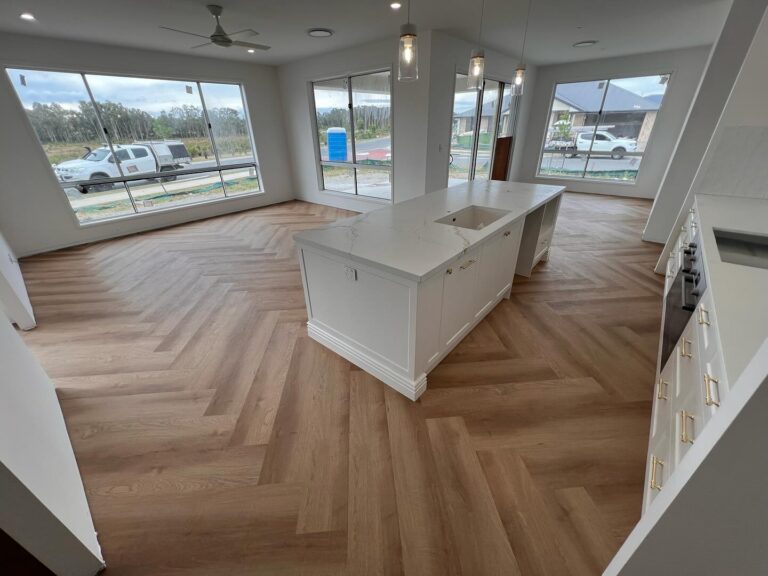
Herringbone is a distinctive flooring pattern made by laying rectangular boards in an interlocking zigzag design.
Each board is positioned at a right angle to the next, creating a repeating pattern that resembles the bones of a fish (hence the name).
It’s a design that has been used in European homes for centuries, but it works just as well in contemporary Australian interiors.
Whether you’re updating a traditional Queensland home or building something more modern, herringbone adds texture, movement and visual interest.
It’s particularly effective in hallways, living areas and open-plan spaces where you want your flooring to make a statement.
It’s easy to confuse these two patterns. They’re similar, but there is one important difference.
Herringbone flooring
The boards have straight, square-cut ends and are laid at right angles to create a staggered zigzag pattern.
The result is a layered, interlocking design that feels classic without looking old-fashioned.
Chevron flooring
The ends of the boards are cut at an angle, allowing them to meet in a continuous V-shaped point.
This creates a more symmetrical, streamlined appearance.
Both designs look fantastic, but herringbone tends to have a more traditional feel, while chevron offers a cleaner, more contemporary finish.
Not all flooring materials perform the same way. Choosing the right one is just as important as choosing the pattern.
Here’s what you need to know.
Best for: Busy households, kitchens and everyday living areas.
Vinyl plank flooring is a popular option for families who want the appearance of timber without the same level of maintenance.
Depending on the product, vinyl flooring can offer:
Water-resistant or waterproof performance.
A comfortable, quieter feel underfoot.
Easy everyday cleaning.
Good resistance to the knocks and scratches of family life.
Realistic timber-inspired colours and textures.
It’s particularly worth considering in Queensland homes, where wet feet, busy households and summer storms can put flooring to the test.
Just remember that water resistance varies between products, so check the specifications before choosing.
Best for: Living rooms, bedrooms and dry areas where you want a timber-inspired finish.
Laminate flooring is another way to achieve the herringbone look without the cost of genuine timber.
Modern laminate products can replicate the appearance of natural wood grain, giving your home a crisp, polished finish.
Benefits include:
Realistic timber designs.
A durable wear surface.
Good resistance to everyday scratching, depending on the product.
A wide selection of colours and finishes.
Often a more affordable alternative to engineered timber.
The main consideration is moisture. While some laminate products offer improved water resistance, prolonged exposure to water can still cause damage.
For this reason, check the product’s water-resistance rating and suitability for the room before making your decision.
Best for: Homeowners who want the warmth and character of genuine timber.
If you love the look and feel of real wood, engineered timber is worth considering.
It features a genuine timber veneer on top of a layered, stable core. This gives you the natural grain and character of timber while helping minimise movement compared with traditional solid timber flooring.
Benefits include:
Genuine timber surface.
Natural variations in grain and colour.
A warm, premium appearance.
Greater dimensional stability than solid timber.
A timeless finish that works across different interior styles.
Engineered timber generally comes at a higher price point and requires appropriate care, particularly around moisture.
If you’re looking to create a premium finish that makes a real impression, it’s an option worth exploring.
Here’s something worth knowing before you start budgeting.
Herringbone flooring generally costs more to install than traditional straight-laid planks.
And it’s not simply because the pattern looks more complicated.
There’s considerably more planning and precision involved.
1. More cutting
Boards need to be cut carefully around walls, doorways, corners and other obstacles. This creates additional labour compared with installing straight planks.
2. Precise measurements and planning
The pattern needs to be set out correctly before installation begins. Even a small alignment issue can become noticeable as the pattern continues across the room.
3. Additional material waste
Because of the number of cuts required, you’ll generally need to allow for more offcuts when calculating how much flooring to order.
4. Subfloor preparation
A level, properly prepared subfloor is important for any flooring installation, but precision becomes even more important with herringbone.
Uneven areas can affect the finished appearance and performance of your floor.
The takeaway? Make sure you’re comparing the full supply and installation cost, rather than just the price per square metre of the flooring itself.
One of the great things about herringbone is its versatility. It can work in both smaller spaces and larger open-plan homes.
Here are a few places where it can really shine:
Hallways and entryways
The repeating pattern draws the eye through the space, creating a sense of movement and making an entrance feel more considered.
Open-plan living and dining areas
Herringbone can help define a space without needing different flooring between living and dining zones.
Bedrooms
If you want something a little different from traditional straight planks, herringbone can add warmth and character without overwhelming the room.
Home offices and studies
It’s a great way to introduce some personality into a space that might otherwise feel a little plain.
It can.
The direction and layout of the pattern can influence how you perceive a room. Running the pattern along the longest dimension can help draw the eye through the space, creating a greater sense of length.
The board size, colour and amount of natural light will also influence the overall effect.
Unlikely.
While herringbone has become increasingly popular in modern interior design, it’s not a new trend. The pattern has been used for centuries, and its versatility means it can work with both traditional and contemporary interiors.
It’s one of those designs that can look just as good years down the track as it does on installation day.
Sometimes, yes.
It depends on the condition, material and level of your existing floor, as well as the installation requirements of the new flooring.
In some cases, existing flooring may need to be removed or the subfloor prepared before installation.
The best way to find out is to have the area assessed before committing to your new floor.
Absolutely, provided you choose the right flooring material.
Vinyl and suitable laminate products can be practical options for busy households. However, durability, scratch resistance and water resistance vary between products.
Consider how your family uses each room before making your choice.
Generally, yes.
The flooring material itself may be priced similarly to its straight-plank equivalent, depending on the product. However, installation usually costs more because of the additional planning, cutting and labour involved.
Always request a supply and installation quote so you can compare the full cost.
Herringbone flooring can add something special to your home, but choosing the right material is what makes the difference between a floor that simply looks good and one that works for your lifestyle.
At Revolution Flooring, we can help you explore your options, compare flooring styles and find a solution that suits your home and budget.
Whether you’re leaning towards vinyl, laminate or engineered timber, let’s find the right fit.
Book your FREE measure and quote with Revolution Flooring today.
Get expert advice, explore your options and take the first step towards floors you’ll love coming home to.
Herringbone is one of the most requested looks in Queensland...
Read MoreCan carpet work with kids and pets? Yes, in the...
Read MoreKids. Muddy paws. Spilt drinks. Humidity. Carpet That Can Handle Kids, Pets...
Read MoreIf you’ve got a busy household you already know the...
Read More© Copyright Revolution Flooring 2026
We use cookies to improve your experience on our site. By using our site, you consent to cookies.
Manage your cookie preferences below:
Essential cookies enable basic functions and are necessary for the proper function of the website.
These cookies are needed for adding comments on this website.
